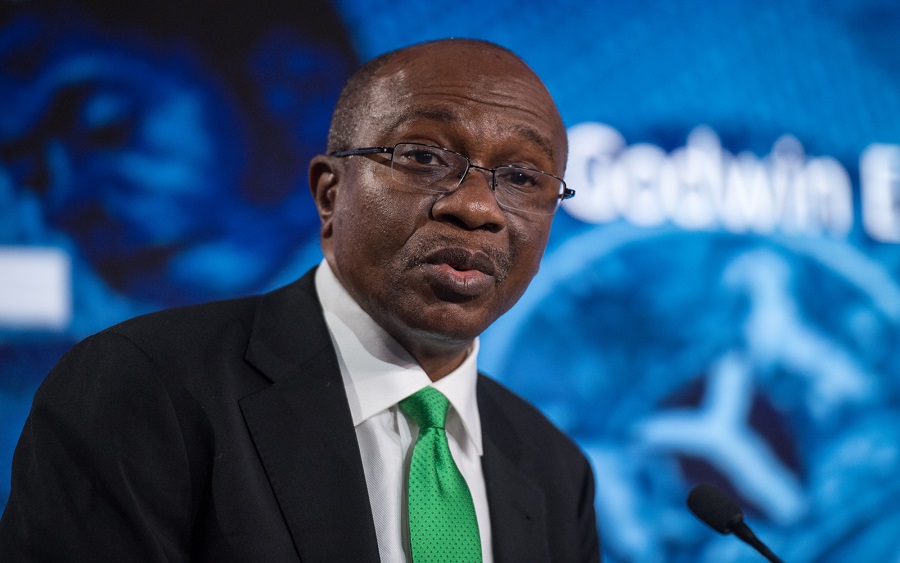
If i were CBN Gov


Northern monarchs demand federal government to halt repatriation of almajiris

The Secretary to the Government of the Federation (SSG), Boss Mustapha, on Tuesday disagreed with Director General of the Nigerian Centre for Disease Control (NCDC), Chikwe Ihekweazu, when he called on the House of Reps to amend the Quarantine Act.

The Northern Traditional Leaders Council (NTLC) wants federal government to directly issue an order stopping the repatriation of almajirai to their home states, warning the movement would escalate the spread of Covid-19 in the north of the country.

This is as the Federal Government urged the traditional leaders to safeguard their communities by mobilizing, sensitizing reporting and monitoring activities within your domains in order to contain further spread of the Coronavirus.

The Secretary to the Government of the Federation (SGF) Boss Mustapha, has said that the repatriation of the Almajaris from one state to the other is against the presidential order banning inter-state travels.

The Chairman of the Council, Samila Mohammed, who made the call at an online emergency meeting between the government and traditional leaders on primary health care on Wednesday, decried the manner the almajaris are conveyed in long convoys heavily guarded by security operatives that cannot be stopped at any check point.

“We are concerned over the repatriation of the almajaris to various states without testing them for the coronavirus, such actions would escalate the spread of the virus,” he said.

Also speaking, the Emir of Jiwa, Idris Musa urged the government to do something about the way people who died of the virus are buried, stressing that most of the people who participates in burying the corpses do not wear any personal protective equipment.

He stressed the need for a sustained enlightenment to ensure that victims of COVID-19 are not stigmatized or discriminated against.

On his part, the Mai Kaltungo, Saleh Muhammed, urged the government to establish a testing centre in Gombe State in order to reduce turnaround time for testing and treatment.


Speaking earlier, the Minister of Health, Dr. Osagie Ehanire, told the traditional leaders to assist in ensuring compliance with government’s directives on interstate movement as it constitutes a risk for Nigerians as some of the Covid-19 are asymptomatic and can spread the virus.

He said that the Presidential Order banned interstate travel except for movement of goods.

He said, “These are indeed trying times for our dear country and indeed the world as the novel coronavirus or COVID-19 has been spreading exponentially since December 2019 when it was first detected in Wuhan China. We are faced with a pandemic that is ravaging through our communities, killing our people hence the need for us to work together to save our communities and our dear country from the grasp of this deadly virus.

“Today over 2500 confirmed cases of COVID-19 have been recorded across the country, out of which 1154 cases were recorded in Northern Nigeria. We are therefore counting on your continued support during this outbreak just as you have partnered with us to stop polio transmission. Your leadership in this effort is still fresh in our minds.”

On his part, Executive Director, National Primary Healthcare Development Agency (NPHCDA), Dr. Faisal Shuaib, said that the meeting was convened as part of collaboration between the agency and the traditional institutions countrywide to have more insight on what should be done especially now that the country is witnessing community transmission of coronavirus.

“We want to tap into the experience of the traditional leaders because they were on the frontlines in the fight against the Wild Polio Virus. We want to stop the virus from spreading further into our communities,” Shuaib said.

Get more stories like this on Twitter

AD: To get thousands of free final year project topics and other project materials sorted by subject to help with your research [click here]


nairametrics

FEATURED

What I’ll do if I was CBN Governor – Experts

“As a nation, we cannot afford to continue relying on the world for our food, education, and healthcare.”  said Godwin Emefiele.

Published


on

 
IMF, CBN OMO ban could give stocks a much-needed boost , CBN’s N132.56 billion T-bills auction records oversubscription by 327% , Nigeria pays $1.09 billion to service external debt in 9 months , Implications of the new CBN stance on treasury bill sale to individuals, Digital technology and blockchain altering conventional banking models - Emefiele  , Increasing food prices might erase chances of CBN cutting interest rate   , Customer complaint against excess/unauthorized charges hits 1, 612 - CBN , CBN moves to reduce cassava derivatives import worth $600 million  , Invest in infrastructural development - CBN Governor admonishes investors , Credit to government declines, as Credit to private sector hits N25.8 trillion, CBN sets N10 billion minimum capital for Mortgage firms, CBN sets N10 billion minimum capital for Mortgage firms , Why you should be worried about the latest drop in external reserves, CBN, Alert: CBN issues N847.4 billion treasury bills for Q1 2020 , PMI: Nigeria’s manufacturing sector gains momentum in November, CBN warns high foreign credits could collapse Nigeria’s economy, predicts high poverty, MPC Member, BVN, Fitch, Foreign excchange (Forex), Overnight rates crash after CBN’s N1.4 trillion deduction
Wealth.ng

“What if the COVID-19 onslaught continues in a second wave? For how long shall we continue to rely on the world for anything and everything at every time?” said Godwin Emefiele, Nigeria’s Central Bank governor. He added, “As a nation, we cannot afford to continue relying on the world for our food, education, and healthcare.” 

In keeping with his vow to run Nigeria’s Central Bank effectively by supporting economic growth and the developmental necessity for Nigeria, Godwin Emefiele has made sure Nigeria’s Central Bank becomes an important driver of growth to Nigeria’s economy

UBA ADS

Nairametrics interviewed investment bankers and financial experts asking for their opinions on what policies they would implement if they were the helm of CBN.

Their responses were as interesting as they were varied ranging from diversifying the economy, adjusting the value of the naira to fighting inflation

(READ MORE:Naira appreciates to N450/$ in parallel market, as CBN intervenes)

GTBank 728 x 90

CBN sets N650,000 as accreditation fee for personalised cheques, Managing Nigeria’s Central Bank, experts offer insights

Anthony Okafor, Ph.D. Head, Investments & Strategy at Vyne Investment Partners

The Nigerian economy requires an economic vaccine to stimulate the economy and combat the impending recession. The turbulence in the global markets caused by the pandemic and the decline in crude oil prices has accelerated the risk levels in the Nigerian financial system. Monetary policy efforts need to be targeted at sustaining the economy through this cycle.

The aggregate money supply in the economy needs to be elevated via a combination of conventional and non-conventional cash injection measures, including a significant reduction in cash reserve ratios to salvage the economy.

Concerns about inflation may have to be subordinated to allow for productivity and a chance to restart the economy. The CBN’s 50 billion naira fund for households and small businesses is commendable; however, more of such funds would be needed in the coming weeks.

The economy has struggled to recover after the 2014 oil price shock, implying that effective policy measures need to be activated, including the injection of further stimulus packages to support the real sector. The economy has lost over 70% of its revenue, fiscal and monetary authorities might be looking at intervention funds between $50 billion to $70 billion in the next three years.

The earlier $22.7 billion borrowings put on hold needs to be revisited to fund this intervention as opposed to a seasonal devaluation of the naira.

Devaluing the currency is not a magic wand, and currency devaluation as a means of addressing revenue shocks is merely a race to the bottom.

(READ MORE:Nigeria’s food security, GDP growth hinge on financial inclusion of farmers)

Central Bank of Nigeria, Managing Nigeria’s Central Bank, experts offer insights

app

Omeiza Makoju, ACCA, energy expert with Nigeria’s leading oil firm.

“Never let a good crisis go to waste.” This quote has been attributed to Winston Churchill and applies to us at this dire time. In a Nigerian context, the COVID-19 pandemic, dwindling oil prices, and the consequential economic crisis we currently face provides us with a rare opportunity to take drastic measures to address our problems as a nation.

These will be bitter pills to swallow at this time but the crisis has made it easier for our leaders to administer the pills. At the helm of the CBN (Central Bank of Nigeria), Mr. Godwin Emefiele has taken several commendable steps to stimulate sustainable economic growth at this trying time.

The most notable is the plan to inject N3.5T stimulus into the economy in the form of various interventions. Another notable move was the adjustment of the exchange rate in response to “market fundamentals.”

The question as to how well these steps will improve the lives of the average Nigerian still begs to be answered. Putting myself in the shoes of the CBN (Central Bank of Nigeria) governor at this time, I would devalue the Naira and put more emphasis on improving the rate of financial inclusion in Nigeria.

(READ MORE:CBN, Bankers’ Committee order banks not to lay-off any staff)

Taking these drastic actions will be as bold and as progressive as those taken by Mele Kyari, NNPC (Nigerian National Petroleum Corporation) GMD, in removing the fuel subsidies from every Nigerians pocket.

These will certainly be difficult to contend with and will be fraught with political controversy as was the removal of fuel subsidies. Naira Devaluation The devaluation will be hard on us in the short-run but with the right monetary policies put in place by the CBN to support the vision; the temporary difficulty will lead to sustainable economic growth for our nation in the long-run.

Financial Inclusion Coincidentally, the CBN had set a target to achieve 80% financial inclusion in Nigeria this year, 2020.

But EFInA reported in February this year that it is unlikely that this target will be met due to demographic changes. Interestingly, the subscriber records of the NCC (Nigerian Communications Commission) show a teledensity of over 98% (a population estimate of 190 million was used) as at February 2020.

Looking at all this information together reveals a compelling opportunity for the CBN to cut red tape and work closely with relevant stakeholders to do much more in leveraging technology to achieve their financial inclusion target.

The current business realities of social distancing, working remotely and the unprecedented dependence on technology during this pandemic also supports this financial inclusion strategy. No matter what happens, our outstanding resilience as Nigerians will see us through.

(READ MORE:Official: CBN says N360/$1 not devaluation but “adjustment of price”)


Princejoe Nnaji Corporate Strategy Analyst at Nigeria’s top tier-1 bank.

As the CBN governor, I will pursue policies that support the exportation of goods and services that are essential to diversify the Nigerian economy. The goal is to increase revenue generation which would drive sustainable growth and increase our external reserves.

The policies should be aimed at encouraging the local processing of raw materials to semi-finished form or finished form in the medium or long term respectively instead of exporting raw materials without any value add. This, in turn, will generate more value, boost local production, create employment, and increase investment in the infrastructure sector which is a key driver of GDP growth.

These policies cannot be introduced in isolation because there is a need to create a conducive business environment to aid these businesses to thrive. Along with ease of getting credit, the Central Bank of Nigeria will need to co-ordinate with the government across all levels to sustain the gains on the World Bank’s ease of doing business ranking (currently ranked 131 among 190 economies).

READ ALSO: Covid-19: SBM Intel lists out industries that may be out of business post Coronavirus

Emmanuel Emeka Orji Emerging and Frontier Markets | Fixed Income | Comercio Partners

Whilst the move to unify and eliminate the multiple exchange rate regime promised to the IMF is very much welcomed and a step in the right direction, the CBN still needs to intensify its efforts by adopting some other tactics in the bid to save the Nigerian economy.

(READ MORE:Just-in: CBN Governor guarantees investors over forex repatriation)

Furthermore, whilst a low-interest environment may be good for the local manufacturing and real sector, we believe our interest rates are significantly low compared to our peers in the Sub Saharan African region, therefore, putting Nigeria at a risk of attracting less FDIs and FPIs.

Nevertheless, given that our economy is largely import driven and a lack of foreign inflow could further put pressure on our external reserves, we believe the CBN needs to continue to find ways to keep our interest rates competitive whilst also continuing the various intervention programs to help grow the real sector and ultimately significantly reduce the reliance on importation


A

 
Unmute
 
Unmute

Comments

Popular posts from this blog

Dr. Bunshak Speaks on Kanke Development

 For too long our local government has existed only in name, present on paper but unfortunately oblivious in reality. We have waited for Federal presence, hoped for State intervention and watched development pass us by, but history teaches us a hard truth that no community is rescued until it decides to rescue itself I am not aspiring because our local government is strong but because together we can give it a Face . I am not promising miracles from Abuja or the State capital but I am promising leadership that starts here, listens here, and works from here Development does not begin with big allocations, it begins with honest leadership, clear priorities, and the courage to use little resources wisely What makes me an option to consider is not noise or connections, but understanding. I understand the pain of bad roads because I use them. I understand insecurity because my people live with it. I understand poverty because I have seen potentials wasted, not because our people are la...

Hon. Dr. Bunshak on Agricultural revolution

 AGRICULTURAL AGENDA FOR KANKE LOCAL GOVERNMENT Agriculture is the backbone of Kanke, when our farmers succeed our communities prosper OUR PRACTICAL PLAN FOR AGRICULTURE 1. PROFITABLE FARMING FOR EVERY WARD  - Organize farmers into ward-based cooperatives - Promote cluster farming for maize, potatoes, acha, beans and vegetables - Provide shared tractors, ploughs and sprayers managed transparently 2. INPUTS AT THE RIGHT TIME - Ensure early access to quality seeds, fertilizer and herbicides - Partner with Plateau ADP, NGOs and private suppliers - Inputs go to real farmers, not middlemen 3. YOUTH AND WOMEN AGRIBUSINESS PROGRAM - Support poultry, fish farming, piggery, beekeeping and vegetable gardens - Starter kits + simple training - Guaranteed local markets (schools, clinics and local markets) 4. DRY SEASON AND IRRIGATION FARMING  - Rehabilitate streams and small water points - Introduce low-cost irrigation and water pumps - Promote year-round vegetable production 5. STORA...

Hon. Dr. Bunshak speaks on Security

    SECURITY Y FOR A SAFER KANKE OUR SECURITY VISION To secure lives, property, farms, markets, and borders of Kanke through community participation, strong partnership with security agencies, and proactive conflict prevention so that development can thrive SEVEN (7) POINTS SECURITY AGENDA 1. COMMUNITY VIGILANTE SYSTEM - Establish a lawful, trained, and accountable community vigilante corps - Ward-based recruitment with traditional rulers - Non abusive, intelligence driven operations - Youth employment with discipline and purpose 2. STRONG PARTNERSHIP WITH SECURITY AGENCIES  - Monthly Local Government Security Council - Joint patrols with Police and NSCDC - Faster response through shared intelligence - No rivalry one security goal 3. PROTECTION OF LIVES AND PROPERTIES - Neighborhood watch in all communities - Security at markets, schools, worship centers - Solar streetlights in flashpoints - 24/7 emergency response teams 4. BORDER AND RURAL SECURITY - Secure all entry and...